
Whiplash was a film that I knew I would thoroughly enjoy as soon as the trailer caught my attention. Back in 2014 I used to play the drums a lot more than I do now and the idea of a drama based around percussion captivated me. The anticipation grew and I was buzzing to finally see the film receive it’s delayed release for UK cinemas in early 2015. Since then, Whiplash is now a film I’ve seen too many times, which tells you an awful lot about it.
On a general level, it’s quite an experience to sit through. It’s strengths go beyond just observing the story for the first time. I re-watch it to feel what it wants you to – the frustrating, angry and suspenseful story of a musician pursuing greatness maliciously driven to the edge by an abusive force of nature However, on a more personal level, it’s a film which communicates the kineticism and physical exhilaration of playing the drums – something I can relate to despite having never been under the pressure of performing in a jazz band myself.
The dynamic editing and cymbal-glow colour palette almost emulate the visuals of sitting at the stool of a drum kit. The up close angles of each beat from the sticks show a side of drumming hardly seen in film – that of ugly precision. The technical terms littered throughout the dialogue build a grounded world where these people take their craft very seriously, whilst demonstrating that writer and director Damien Chazelle knows exactly what he’s talking about by basing the film off his own experiences. The world of Whiplash isn’t from a fairytale; the magic of ‘talent’ doesn’t exist here. This is a world where to achieve perfection one must dive deep into methodical practise, bloodthirsty competition and vicious manipulation.
I decided to watch Whiplash again to intentionally find something to discuss since I’m now three blog entries in and have yet to write anything about film. The initial question of ‘Which film should I write about?’ was answered swiftly when I moved out of my flat last week, as Whiplash had the honour of its poster being displayed on my wall.
The shortlist of things to write about were either a result of me trying too hard to find a topic and/or discussions multiple video essays had covered before. I had a bit of choice paralysis too, but then decided to reflect on how the film made me feel back when I was looking forward to it and to specifically focus on one tiny moment showcased in the trailer which I very much appreciate in the film, especially with the context surrounding it.
So instead of talking about one of the most explosive moments of Whiplash, I’m going to talk about a moment belonging to the calmer side of the spectrum.
The scene in question is the date between protagonist Andrew (Miles Teller) and Nicole (Melissa Benoist). The moment is when Nicole sweetly communicates to Andrew that she’s starting to warm up to him and that he makes her feel comfortable.
Arriving into the scene, we have already met the film’s aggressive core in the form of Terrence Fletcher (J.K. Simmons), providing Andrew’s first evisceration, shock and humiliation from a less-than-perfect performance at his first rehearsal. Coming from a distressing “practise” scene (self-harm is probably a better word) full of hot, warm glows of the studio band rehearsal room, we get flushed with cool, cold light from the urban pizza joint as Andrew and Nicole get to know each other.
There’s a slightly awkward back and forth as Andrew can’t help but show off an encyclopaedic knowledge of the diegetic music and showing how his obsession can’t be put aside, even if it’s for where he eats and where he dates. They connect over their critical parents, discuss college choices, talk about feeling out-of-place in their respective schools and ultimately bond over homesickness.
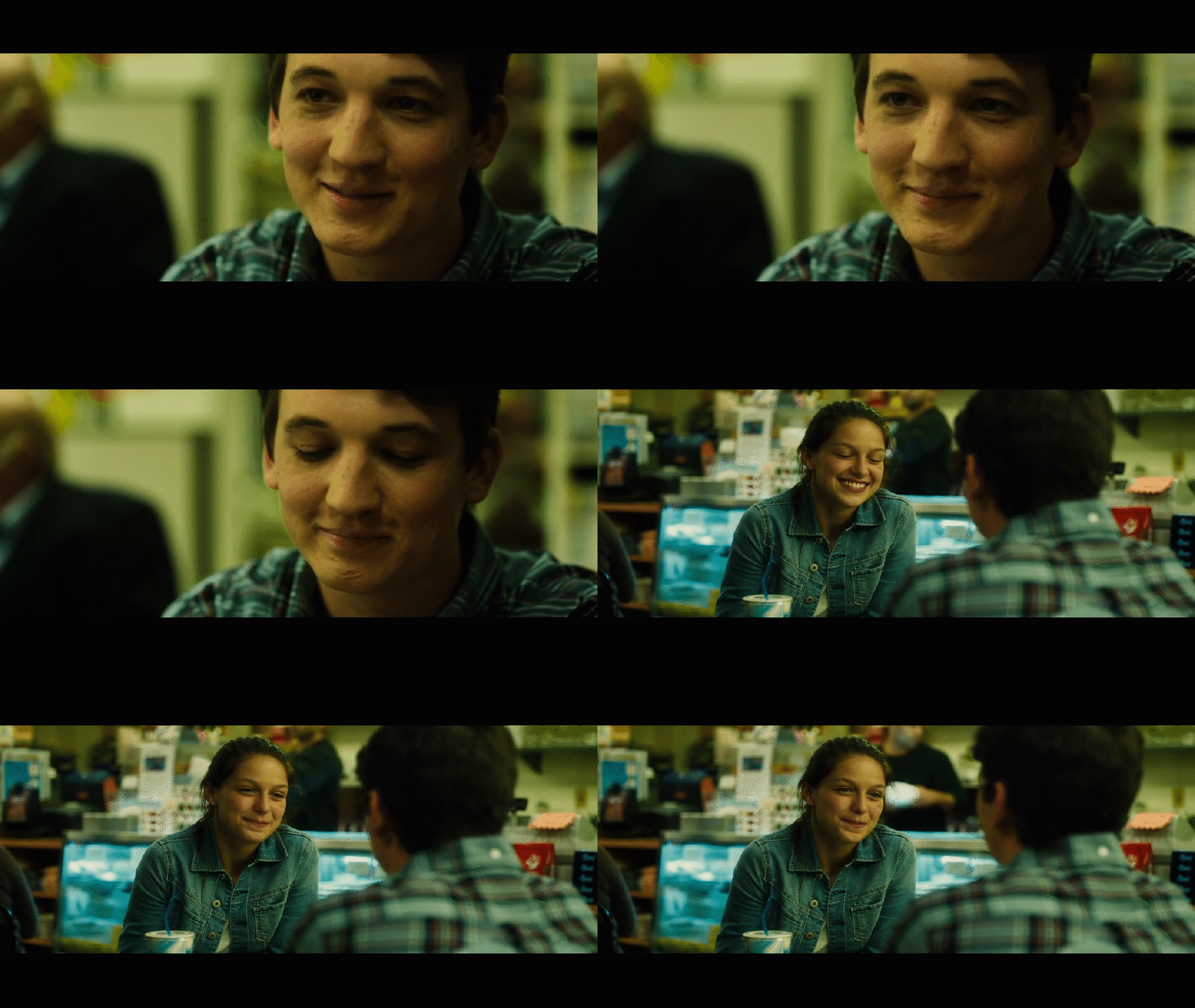
Andrew shows solidarity by reminding Nicole that he still goes to the movies, her place of work, with his dad. In this short moment of shared laughter, Nicole realises that she definitely isn’t the only one who feels that way and Andrew is someone who really does understand how she feels. From here on out, there aren’t any more lines of dialogue, because everything that needs to be said is done through movement. The music arises in the mix. They both flicker between maintaining eye contact and staring downwards, all whilst exchanging smiles.
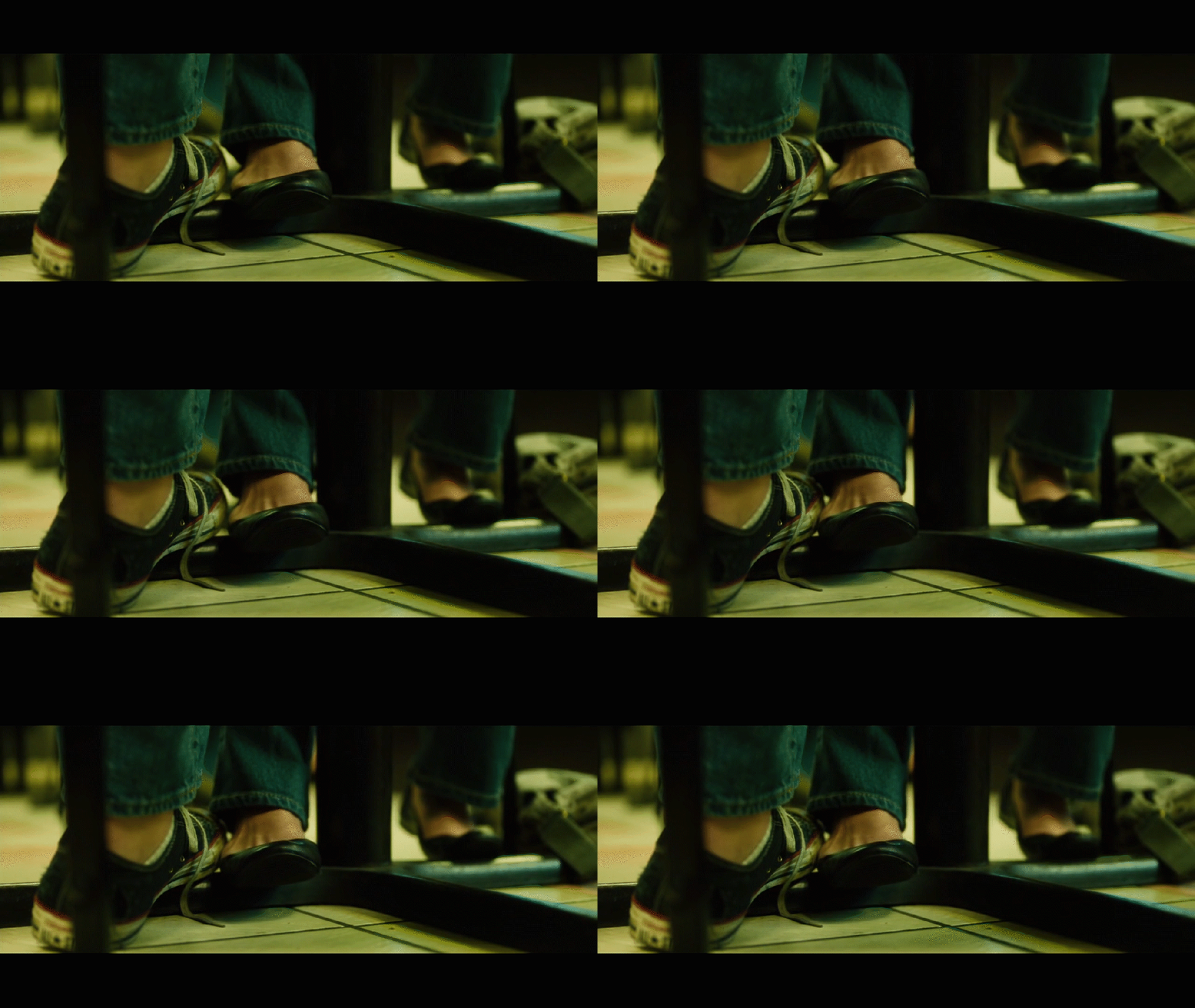
The shot changes to that of their feet underneath the table, with Nicole making the subtlest of shifts to have her foot meet Andrew’s.
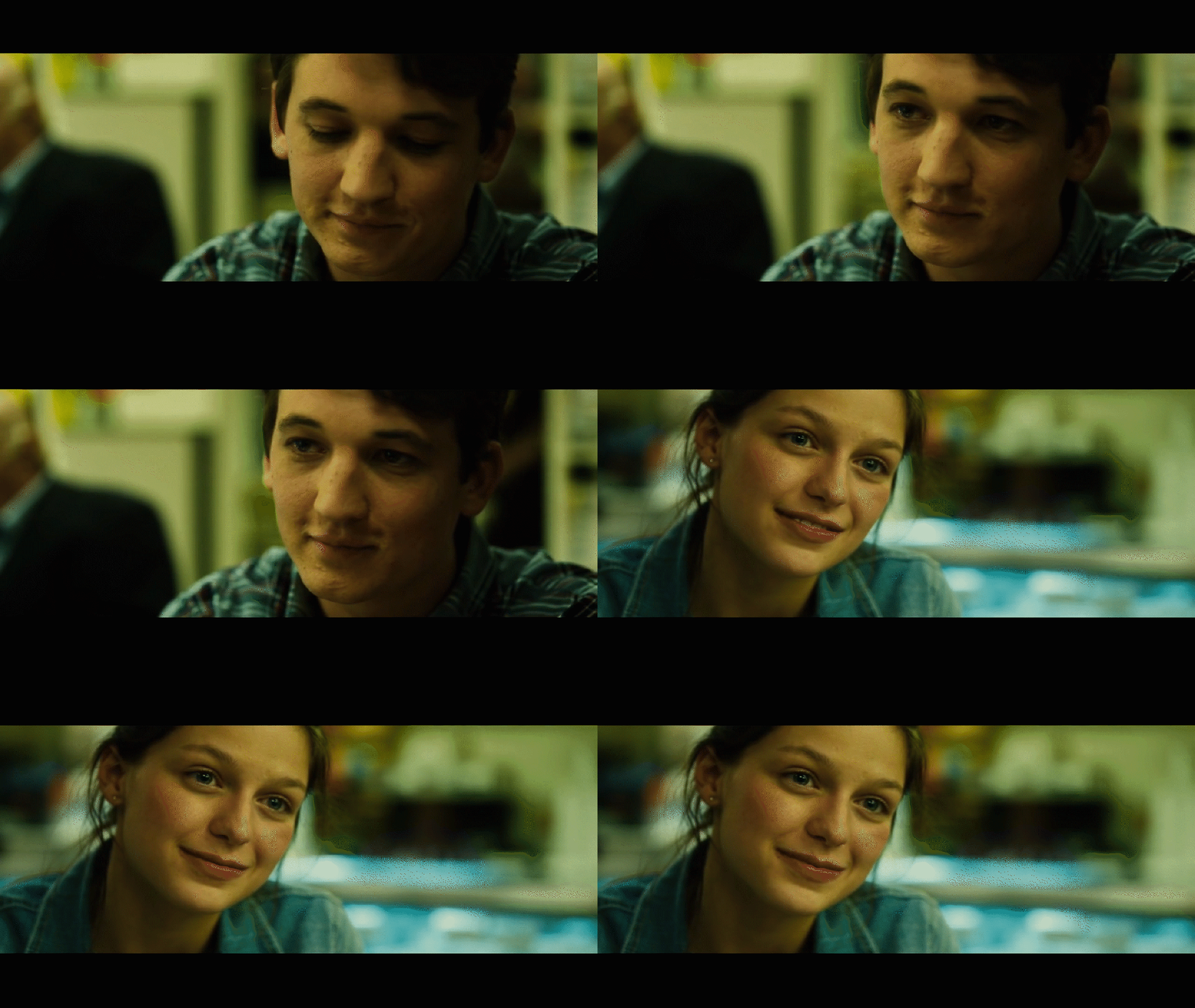
He looks back at her to confirm that he got her message only to find her looking at him expectantly. They both lock eyes with a smile as we exit the scene.
For this brief moment of the film, things are good. Andrew had the courage to ask the girl he sees all the time out on a date and has managed to have a pretty successful one, managing to make a sweet, meaningful connection at the end of it.
In Whiplash, malicious emotional calculation is one of the most visible techniques that Fletcher employs. He’s a sniper, acting with military precision to lure his players into a false sense of security so he can blind side them later on. His recon on Andrew during the first rehearsal (making him think he’s unique and acting friendly) is shown to just be a move to acquire emotional ammunition to insult him with later on. His conniving is increasingly apparent on rewatches, with some theories taking it beyond what the film explicitly states.
Precision is something which permeates throughout the whole film too – whether it’s in Fletcher’s conniving, Andrew’s technique or the musicianship behind making great jazz. But here, we see a different kind of calculation: a warmer precise action from Nicole. She wants to send this message to Andrew, but doesn’t want to put it in words. here she emotively reassures Andrew that she likes him and does it with a small signal. By resting her foot on his and making contact, she lets him know that she wants to be a little bit closer to him. Andrew recognises this too, as it makes him look up to find her eyes meeting his.
From a screenwriting perspective, I think that this 2 second moment is pretty fantastic. By having the exit to the scene ending on this note, it sets an upward trajectory for this relationship so that it can be nurtured organically in the mind of the audience, whilst avoiding too many scenes of them both and maintaining screentime on the aggressive, musical identity at the film’s heart. Although female characters are few in the film with Nicole only present for around 7 minutes, this positive moment and her and Andrew’s relationship has a significant impact on his development.
You need the good to see the bad and the light to see the dark. This moment is a star in Whiplash‘s night.
 minutiae+musings